
Menu
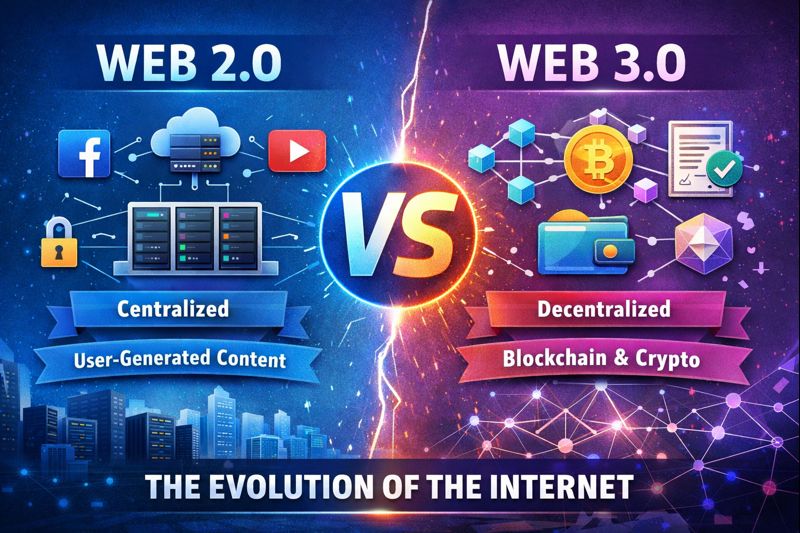
Understanding the Evolution of the Internet
The internet has undergone significant transformation since its inception. From static web pages to interactive platforms and now to decentralized ecosystems, each phase has reshaped how users interact with digital content. Two of the most important stages in this evolution are Web 2.0 and Web 3.0. Understanding the differences between them is critical for businesses, developers, and digital users preparing for the future of the web.
What Is Web 2.0?
Web 2.0 refers to the second generation of the internet, where users are not just consumers of content but active participants. It emphasizes interaction, collaboration, and user-generated content.
Popular platforms such as social media networks, blogs, video-sharing sites, and cloud-based services are all products of Web 2.0.
Key Characteristics of Web 2.0
- User-generated content (posts, videos, comments)
- Centralized platforms controlled by companies
- Social networking and collaboration
- Cloud computing and SaaS models
- Data owned and managed by platform providers
While Web 2.0 has made the internet more engaging and accessible, it has also introduced challenges related to data privacy, monopolization, and control.
What Is Web 3.0?
Web 3.0, often referred to as the decentralized web, represents the next evolution of the internet. It is built on blockchain technology and aims to return data ownership and control to users rather than centralized corporations.
Instead of relying on intermediaries, Web 3.0 enables peer-to-peer interactions, smart contracts, and trustless systems.
Key Characteristics of Web 3.0
- Decentralization using blockchain
- User ownership of data and digital assets
- Token-based economies and cryptocurrencies
- Smart contracts for automation
- Enhanced privacy and security
Web 3.0 seeks to create a more transparent, secure, and user-centric internet.
Web 2.0 vs Web 3.0: Core Differences
| Aspect | Web 2.0 | Web 3.0 |
|---|---|---|
| Architecture | Centralized | Decentralized |
| Data Ownership | Platform-owned | User-owned |
| Control | Corporations | Community / Users |
| Trust Model | Trust in intermediaries | Trustless (code-based) |
| Monetization | Ads & subscriptions | Tokens & digital assets |
| Privacy | Limited | Enhanced |
| Examples | Facebook, YouTube, Google | Ethereum, IPFS, DeFi apps |
Advantages and Limitations
Advantages of Web 2.0
- Easy to use and widely adopted
- Mature infrastructure and tools
- Seamless user experience
- Strong customer support ecosystems
Limitations of Web 2.0
- Data privacy concerns
- Platform censorship
- Single points of failure
- Dependence on centralized authorities
Advantages of Web 3.0
- Greater transparency and trust
- Improved data privacy
- Reduced reliance on intermediaries
- New economic opportunities through tokens
Limitations of Web 3.0
- Technical complexity
- Scalability challenges
- Regulatory uncertainty
- Limited mainstream adoption (currently)
Why Web 3.0 Matters for the Future
Web 3.0 has the potential to redefine digital ownership, online identity, and economic participation. By enabling users to control their own data and assets, it promotes fairness and innovation across industries such as finance, healthcare, gaming, and supply chain management.
“Web 3.0 is not just a technological shift—it is a shift in power from platforms to people.”
Conclusion
Web 2.0 revolutionized how we interact online by making the internet social and collaborative. However, its centralized nature has raised serious concerns about privacy, control, and data misuse. Web 3.0 addresses these issues by introducing decentralization, transparency, and user empowerment.
While Web 3.0 is still evolving, its foundational principles suggest a more secure and democratic internet. For businesses and individuals alike, understanding this transition is essential to staying relevant in the digital future.